

Tycho.AI Secures $2M AFRL TACFI Contract to Advance Maritime Autonomy in GPS-Denied Environments
TRIDENT program to accelerate development and deployment of Voyager autonomy stack for U.S. Air Force edge operations
Cambridge, MA, May 28, 2026 (GLOBE NEWSWIRE) -- Tycho.AI, a pioneer in high-performance edge autonomy, today announced an 18-month, $2 million Tactical Funding Increase (TACFI) contract award from the U.S. Air Force Research Laboratory (AFRL) to accelerate the development and deployment of resilient navigation and autonomous solutions for the modern battlefield.
Under the TRIDENT (Tracking & Resilient Inertial-Derived Estimation for Naval Targets) contract, Tycho.AI will deliver a robust, multi-domain navigation and long-range Intelligence, Surveillance, and Reconnaissance (ISR) solution to the U.S. Air Force. This effort will advance autonomous capabilities for overland and over-the-water operations in GPS-Denied, Degraded, Intermittent, and Limited (GPS-DDIL) environments.
"As jamming, spoofing, and other electronic warfare tactics become a standard of modern conflict, the ability to operate without a signal is no longer optional. It is a mission requirement," said Sertac Karaman, Tycho.AI Founder & Executive Chair. "TRIDENT is expediting the testing and integration of our Voyager autonomy stack to get critical capabilities to the frontlines sooner. This work will ensure our nation’s autonomous systems don’t just survive but thrive in increasingly contested environments.”
The scope of work includes test flights and experimentation with both rotary- and fixed-wing platforms in various environmental conditions across multiple domains to collect data and mature Voyager’s vision-based navigation. Additional overland and maritime demonstrations will validate the system’s autonomous waypoint traversal, multi-agent coordination, mission-level autonomy, and resilient perception capabilities. Tycho.AI will integrate the Voyager autonomy stack with FANTOM middleware to transition the capability into existing operational frameworks.
Voyager is a low-size, weight, and power (SWaP) hardware and software autonomy stack that enables small UAS (sUAS) to maintain precise localization and real-time autonomous decision-making at the edge. It reduces operator cognitive workload and ensures mission success in contested and denied areas. Designed with a Modular Open Systems Approach (MOSA), Voyager fuses AI-driven perception, navigation, and control into a compact module that can be integrated on any uncrewed platform.
“Across a vast, featureless domain with limited connectivity and heavy signal interference, true maritime autonomy has long been a complex technical challenge and significant risk to our national security posture. Voyager is the solution that enables precision over-the-water navigation without the need for communication or any external aids–like GPS or ranging beacons,” Karaman added. “We are honored to support AFRL through this TRIDENT project, rapidly maturing Voyager’s capabilities and deploying it across the fleet to address the very near-term threats to our nation.”
TRIDENT builds on Tycho.AI’s previous success with the AFWERX “High-Precision Low-Size Weight and Power Robust Autonomy and Navigation” program, a $1 million Small Business Innovation Research (SBIR) Phase II research grant awarded to the company in June of 2024. That work focused on developing the hardware, software, and algorithms that serve as the foundation for Voyager, enabling sUAS to operate in contested and denied environments. In addition, Tycho.AI has previously developed and deployed autonomy software within the FANTOM middleware architecture as part of a SOFWERX Adaptive Airborne Enterprise (A2E) effort delivered last May.
###
About Tycho.AI
Tycho.AI builds mission-critical autonomy software and mission-optimized compute hardware for unmanned systems in GPS-denied and comms-contested environments. The company’s edge-executable AI enables intelligent navigation and operation without remote control or persistent connectivity, allowing for fully autonomous high-speed and low-altitude operations. Steered by national security experts and MIT-educated engineers, Tycho.AI is reshaping the future of battlefield autonomy. Visit tycho.ai for more information.
About AFWERX
As the innovation arm of the Department of the Air Force and a division within the Air Force Research Laboratory, AFWERX brings American ingenuity from small businesses and startups to solve the most pressing challenges facing Airmen and Guardians. Headquartered at Wright-Patterson Air Force Base, Ohio, AFWERX strengthens the defense industrial base by expanding access to nontraditional vendors, building new defense partnerships and accelerating the transition of critical technologies to operational capability. In fiscal year 2025, AFWERX awarded more than 1,000 contracts totaling $1.37 billion and achieved 438 Phase III transitions valued at $8.1 billion, supercharging the industrial base that supports U.S. military readiness and battlefield advantage. For more information, visit afwerx.com.
Contact Info
Ashley Young
ashley.young@tycho.ai
+1 256-345-9394
Attachment


Tycho.AI’s Voyager Hardware and Software Stack
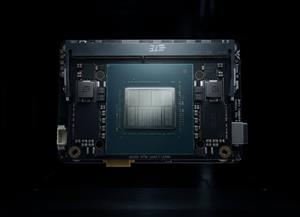
Voyager can be integrated on UAS platforms for precision navigation and edge autonomy in GPS-denied and comms-degraded environments. [Credit: Tycho.AI]
Legal Disclaimer:
EIN Presswire provides this news content "as is" without warranty of any kind. We do not accept any responsibility or liability for the accuracy, content, images, videos, licenses, completeness, legality, or reliability of the information contained in this article. If you have any complaints or copyright issues related to this article, kindly contact the author above.
